
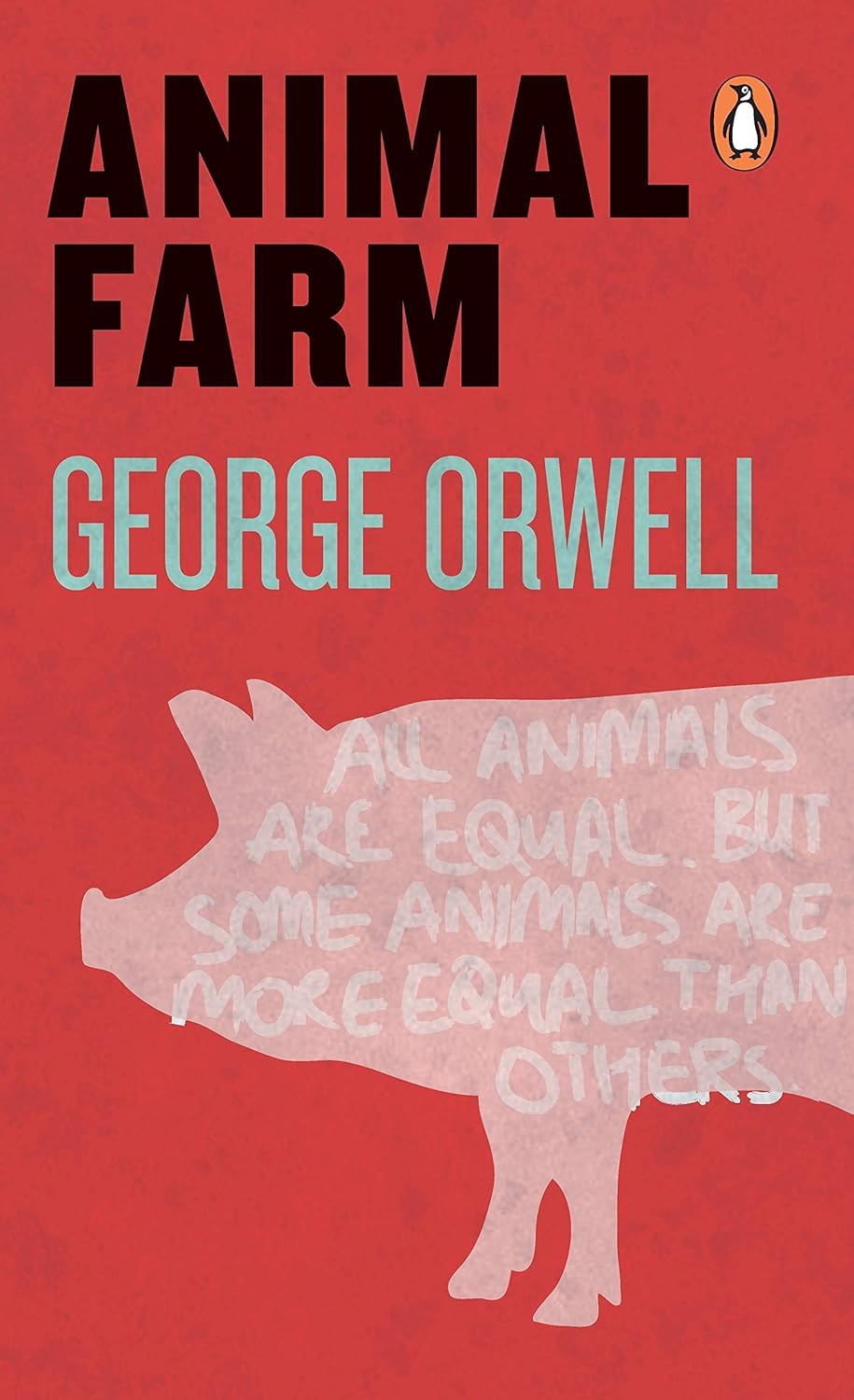
George Orwell’s Animal Farm is an absolute masterpiece, especially when you consider the time it was written. Published in 1945, this brilliant political allegory masterfully disguises a biting critique of totalitarianism within a deceptively simple fable. The story begins on Manor Farm, where the overworked animals overthrow their human master to create a society rooted in equality. Initially, the dream thrives, but it quickly unravels as the pigs, led by the cunning Napoleon, gradually seize control and manipulate the rules. Orwell brilliantly mirrors the events of the Russian Revolution, showing how easily noble ideals can be corrupted by the hunger for power. For its era, the book was a incredibly bold and sharp commentary on the world's changing political climate.
What makes Animal Farm an enduring classic is its chilling relevance and its ability to keep readers gripped from start to finish. Through memorable characters and sharp satire, Orwell illustrates how language can be weaponized to distort the truth, culminating in the famous line, "All animals are equal, but some animals are more equal than others."
However, if there is one major critique or downside to this incredible book, it is the ending—it desperately needs a sequel! The story concludes on such a devastatingly dark, open note that you are left craving for more. As a reader, you can't help but want a second book to find out what happens next to the farm, whether the other animals will ever rebel again, or if the pigs' corrupt regime will eventually collapse. It is a fantastic, thought-provoking read, but it will definitely leave you wishing Orwell had written a part two.

No comments:
Post a Comment